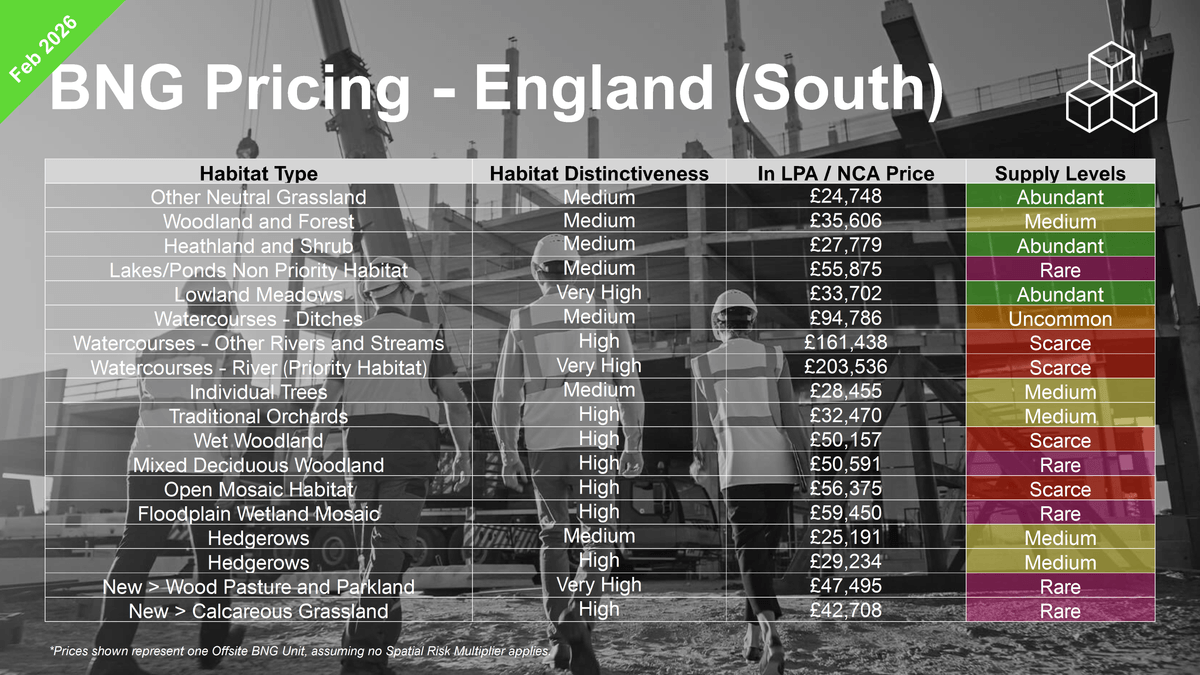
The goal is for the land to have a higher ecological “value” at the end of a set period of time, and that increase in “value” is measured in Biodiversity Units (BU). These BU are put up for sale, usually by either the habitat bank itself or by a broker, and they can be sold proactively (i.e. before the conservation works are undertaken) or retroactively (i.e. after works have taken place). Anybody in need of a particular BU (usually developers who can’t achieve their minimum BNG requirement through on- or off-site mitigation) can then purchase some from the bank via a one-off lump sum, which funds the conservation works and ensures long-term preservation of the habitats.
The overall objective is to offset any adverse impacts on natural habitats and make things a minimum of 10% “better”!
Financial Benefits
If you have land which currently is unused, unproductive, or generally unsuitable for other purposes, returning it to nature could potentially get you access to additional grant funding and a stable income. A lot of building sites nowadays are too small to achieve anything meaningful for nature recovery, meaning you’ll almost certainly have a constant reliable stream of business. And if you happen to already be managing parts of your land for nature, you may as well get paid for it!
You also have the option to combine other environmental schemes to maximise your income. For example; you can sell BU and nutrient credits from the same parcel of land, but you can’t sell BU based on a habitat enhancements funded through an agri-environment scheme (Sustainable Farming Incentive [SFI], Countryside Stewardship [CS], Environmental Stewardship [ES], or Landscape Recovery [LR]). You CAN, however, sell BU based on habitat enhancements on top of an existing agri-environment agreement on the same parcel of land, and the same applies for land under Woodland Creation Partnerships (WCP) grants, Forestry Commission grants, Trees for Climate grants etc. You can find out more info here.


Environmental Benefits
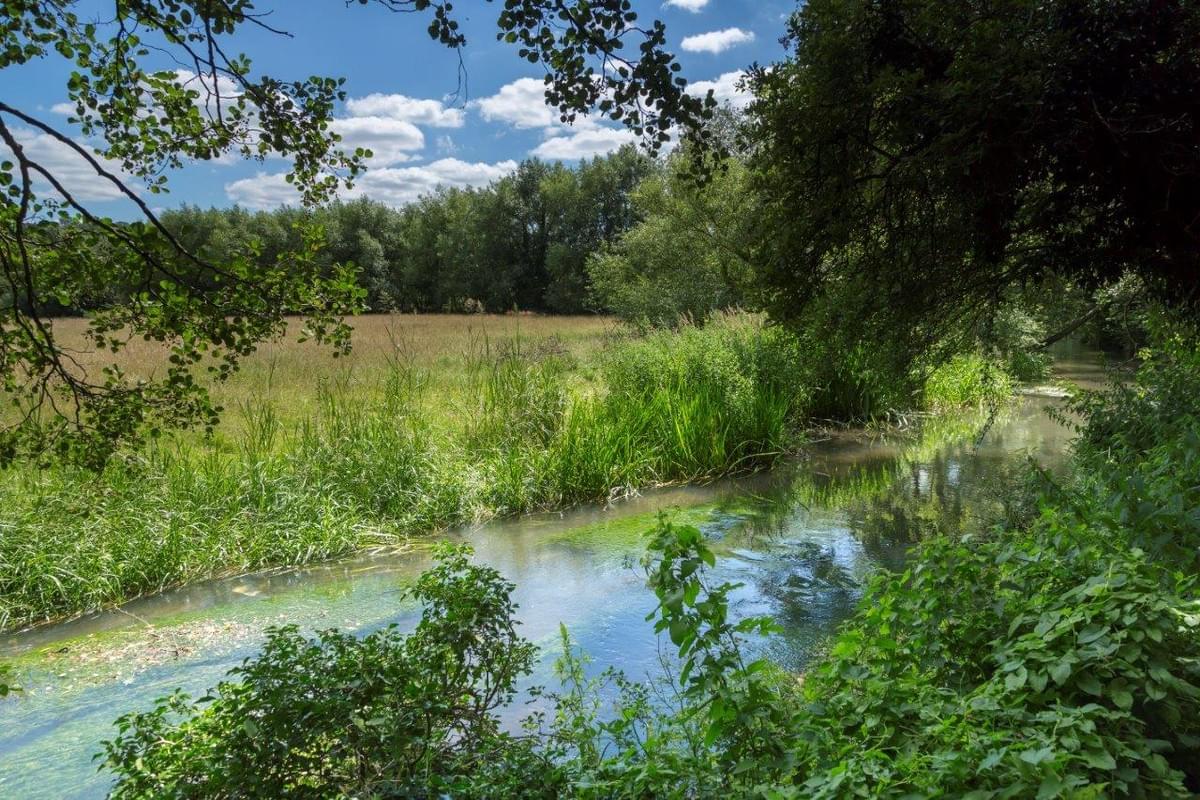
A well-run habitat bank operates like a private nature reserve. You’ll gain unlimited access to whatever habitats you choose to cultivate on your land, some of which may be rare and unusual, and you get to ensure that those habitats are in the best possible condition for your personal enjoyment!
By safeguarding a plot of land from development and managing it exclusively to be of benefit to nature, we create a refuge for plants and wildlife who may have been displaced from their original homes. Creating habitats specific to your region, in strategic places, also creates corridors or “stepping stones” that will help connect isolated populations, making them more resilient in the face of habitat loss/degradation or climate change.
You will also be contributing towards wider-scale ecosystem services. The right habitats in the right place help with flood risk mitigation, air/water purification, carbon storage, heat reduction, nutrient cycling and soil quality, disease control… you get the idea.


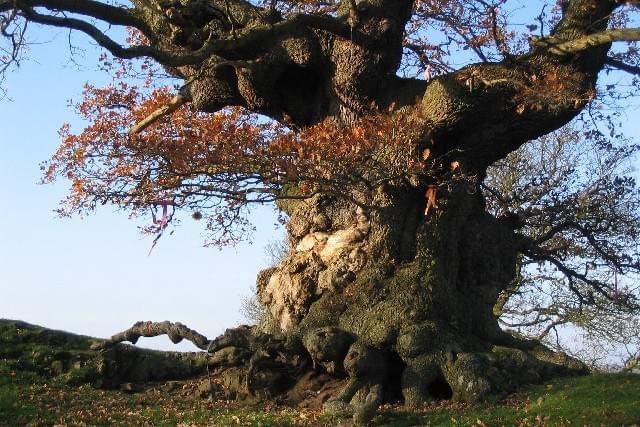
As above, this needs to be large enough, with suitable scope for improvements, and somewhere you’ll still be responsible for in 30+ years. Avoid things like ancient woodland, designated sites, rare habitats, or archaeological features!

Habitat bank creation requires a comprehensive understanding of local ecosystems, conservation priorities, and the specific needs of target plant and animal species. As a bare minimum, you’ll need a suitably qualified ecologist! If you’re planning to bring a broker on board, now is the best time to do it. Depending on your location and the planned habitat works, you may also need one or more of the following:
- Hydrogeologist
- Soil testing
- River/wetland specialist
- Land management
- Species-specific specialist



The scope and time for this stage can vary considerably depending on what you have on your plot, but it’s essential to know exactly what you have and what you can reasonably do with it! The need for further surveys will be discussed following the initial ecologist visit(s).
Once the habitat surveys are complete, the baseline results will be entered into the Statutory BNG metric so you can start working out how many BU you’re going to end up with.

It’s important this is a team effort. The best solution for ecology may not be the best approach from a business point of view, and the amount of time and effort required must align with your own resources. Most of the time, proposals for habitat banks end up being a compromise.




You can do this in two ways; a conservation covenant or a Section 106 (s106) agreement.
A conservation covenant is an agreement between a landowner and a “responsible body”. It is a private and voluntary agreement, setting out what each party must or must not do in order to conserve the natural features of a site or area of land.
An s106 agreement, on the other hand, is an agreement with the LPA. Traditionally, it’s to ensure developers provide local infrastructure as part of their schemes, but it can be used for a variety of scenarios, including securing land for specific purposes (like habitat banking).
Most LPAs prefer an s106 agreement for obvious reasons, but a covenant is equally as legally-binding. If you do choose to go for an s106, check with your LPA what documents and fees they will need. The below list is fairly standard:
- A habitat bank proposal form (usually available on their website)
- Site map showing the entirety of the proposed habitat bank Site - 1:1250 scale (or 1:2500 scale for larger sites)
- Land Registry deed & title plan, or lease agreement to prove ownership
- Local Land Charge Search Certificate detailing conservation areas, planning permissions, tree preservation orders or any other specific charges and restrictions
- Written authorisation from landowner or leaseholder if you are applying on their behalf
- Pre- and post-works habitat maps showing the location and extent of the on-site habitats
- A phasing plan if intending to deliver the habitat site in stages, rather than all at once
- A Statutory Biodiversity Metric - showing both the pre and post development calculations in original Excel format
- A Habitat Management & Monitoring Plan (HMMP)
- Impact statements / information where applicable
- Business model / evidence of cash flow to undertake an assessment of viability.
- A competency statement
- Signed undertaking to pay associated legal, and ecology consultation fees
- Draft legal agreement
- Set up and/or administrative fees
When the LPA have approved your plans, you will need to register the site on the national Biodiversity Gains Site Register before any BU can be sold.

They will review the LPA documents, advise on any additional steps required, and amend reports to reflect any changes.



If you’ve hired a broker, they’ll do most of the heavy lifting for you. If you’re doing this yourself, you’ll need to think about publicity, BU pricing, liaison with developers, certificate creation (you can find an example here) etc.
Bear in mind that BU have a “time to target condition” option! If a developer wants a risk-free option (i.e. the habitat has already been created/enhanced and is in the target condition. This may affect the price you sell it for. Other units can either be sold as “0” (i.e. habitat will be created/enhanced the same year as purchase) or as “minus” values (i.e. habitat will be created/enhanced some time after the purchase).

This is the most variable part of the process. What you do will depend on environmental factors, the habitats to be created, the condition you need to achieve, whether you’re doing the works yourself or not, and many other considerations.
Your ecologist and other consultants will help you find the most time- and cost-effective ways of approaching this.



Monitoring usually takes place in years 2, 5, 10, 15, 20, 25, & 30. Some LPAs, however, may require additional monitoring throughout years 1-5, so your documents must always reflect their preferences. The monitoring will usually take the form of repeat ecology surveys, and possibly others if the proposals require it. The reports must be issued to the LPA so they can ensure compliance, and you might need to undertake additional works if needed.

Wealden 10% BNG (20% BNG on “qualifying” sites); Rother 10% BNG (20% BNG on “qualifying” sites); Hastings 10% BNG (20% BNG proposed); Eastbourne 10% BNG (higher is encouraged, 20% BNG proposed); Lewes 10% BNG (higher is encouraged); Brighton & Hove 10% BNG; South Downs 10% BNG; Thanet 10% BNG; Dover 10% BNG; Canterbury 20% BNG; Folkestone & Hythe 10% BNG; Tunbridge Wells 10% BNG; Ashford 10% BNG; Maidstone 10% BNG (20% BNG on residential sites); Swale 10% BNG; Tonbridge and Malling 10% BNG; Medway 10% BNG; Gravesham 10% BNG; Dartford 10% BNG; Sevenoaks 10% BNG (20% BNG proposed); Ebbsfleet Development Corporation 10% BNG; Adur 10% BNG (20% BNG encouraged, mandatory on Significant Sites); Worthing 10% BNG (20% BNG encouraged, mandatory on Significant Sites); Arun 10% BNG; Chichester 10% BNG; Horsham 10% BNG (12% BNG proposed); Mid Sussex 10% BNG (higher is encouraged); Crawley 10% BNG; Tandridge 10% BNG; Reigate and Banstead 10% BNG; Epsom and Ewell 10% BNG; Mole Valley 20% BNG; Elmbridge 10% BNG; Spelthorne 10% BNG; Runnymede 10% BNG; Surrey Heath 10% BNG; Woking 10% BNG; Guildford 20% BNG; Waverley 10% BNG; West Berkshire 10% BNG; Reading 10% BNG; Wokingham 10% BNG; Windsor and Maidenhead 10% BNG; Slough 10% BNG; Bracknell Forest 10% BNG; Basingstoke and Deane 10% BNG; Hart 10% BNG; Rushmoor 10% BNG; East Hampshire 10% BNG; Winchester 10% BNG; Test Valley 10% BNG; Eastleigh 10% BNG; Southampton 10% BNG; Fareham 10% BNG; Gosport 10% BNG; Portsmouth 10% BNG; Havant 10% BNG; New Forest 10% BNG; Isle of Wight 10% BNG; Enfield 10% BNG; Waltham Forest 10% BNG; Redbridge 10% BNG; Havering 10% BNG; Barking and Dagenham 10% BNG; London Legacy Development Corporation 10% BNG; Bexley 10% BNG; Greenwich 10% BNG; Newham 10% BNG; Tower Hamlets 10% BNG; Lewisham 10% BNG; Bromley 10% BNG; Croydon 10% BNG; Sutton 10% BNG; Merton 10% BNG; Wandsworth 10% BNG; Lambeth 10% BNG; Southwark 10% BNG; Kensington and Chelsea 10% BNG; Westminster 10% BNG; Hammersmith and Fulham 10% BNG; Hounslow 10% BNG; Richmond upon Thames 10% BNG (20% BNG proposed); Kingston upon Thames 10% BNG (30% BNG proposed); Hillingdon 10% BNG; Old Oak and Park Royal Development Corporation 10% BNG; Ealing 10% BNG; Brent 10% BNG; Harrow 10% BNG (15% BNG proposed); Camden 10% BNG; Barnet 10% BNG; Haringey 10% BNG; Islington 10% BNG; Hackney 10% BNG; City of London 10% BNG; Cherwell 10% BNG; West Oxfordshire 10% BNG; Oxford 10% BNG; Vale of White Horse 10% BNG (20% BNG proposed); South Oxfordshire 10% BNG (20% BNG proposed); Buckinghamshire 10% BNG (20% BNG “aspiration”); Milton Keynes 10% BNG (20% BNG “aspiration”)